Introduction
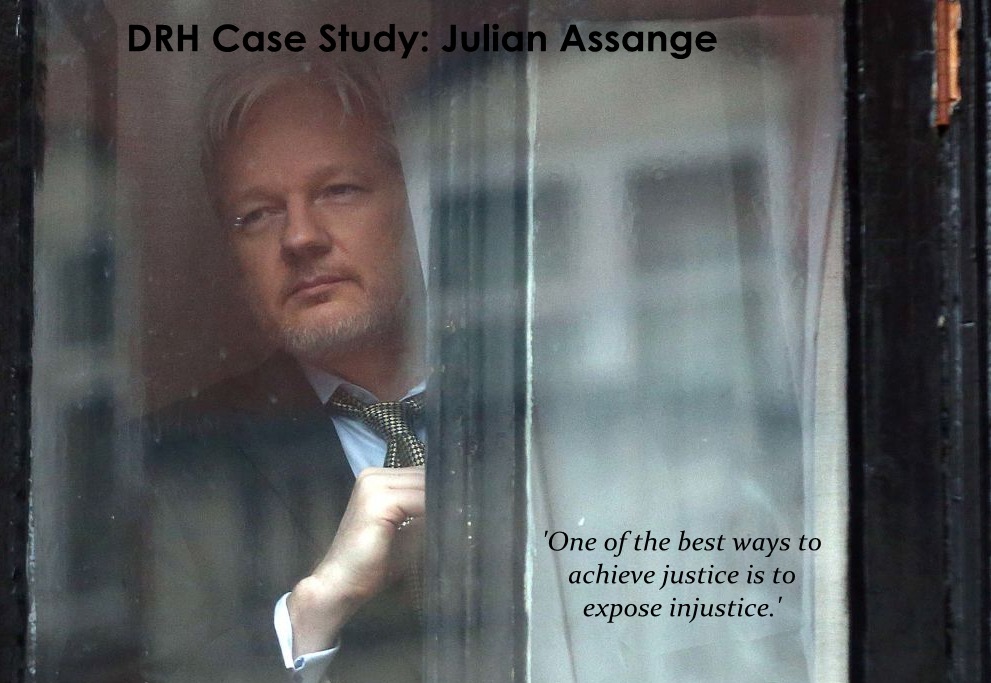
Julian Assange (born 1971) is an Australian technologist-turned-activist best known as the founder of WikiLeaks, a platform that has published secret documents of governments and corporations. His life and career have been marked by a relentless drive to expose what he sees as the truth, even at great personal cost. This biography examines Assange's journey - from his unconventional upbringing and hacker youth to the global impact of WikiLeaks and his prolonged legal struggles - through the analytical framework of the Deindividuation Resister Hypothesis (DRH) and the model of The Neurological Spectrum (Between Individual and Collective Identity). The DRH posits that human progress is driven by rare individuals who resist social conditioning and retain their individual identities despite pressures to conform. In the context of the neurological spectrum, such individuals act on personal conviction rather than group expectation. We will see how Assange's life exemplifies an extreme commitment to independent thought and moral agency - a modern instance of a 'deindividuation resister' - and how his case illustrates the dynamics of this hypothesis.
Early Life and Family Background
Julian Paul Assange was born on July 3, 1971, in Townsville, Queensland, Australia. His family life was non-traditional and itinerant. Assange's mother, Christine, was an artist and his biological father, John Shipton, was an anti-war activist, though his parents separated before his birth. In infancy, Julian's mother married theatre director Brett Assange, and the family spent years moving frequently across Australia while producing small theatrical shows. Assange thus grew up on the road, attending roughly 37 different schools and often learning at home via homeschooling and correspondence courses. This peripatetic childhood meant Assange never stayed in one community long enough to be deeply enculturated into any single peer group. According to the DRH perspective, this liberal upbringing insulated him from strong collective conditioning, allowing him to retain an individual identity from an early age. His mother encouraged his interests and did not pressure him to adopt her religion, nationality or other group identities. As a result, young Julian learned to view people as equals in their individuality, rather than through the lens of group affiliations - a trait characteristic of the Individual end of the neurological spectrum.
Even as a child, Assange showed intellectual curiosity and an independent moral compass. His stepfather Brett later described Julian as a 'sharp kid who always fought for the underdog,' recalling that the boy had a keen sense of justice and empathy for those treated unfairly. This early reputation for sticking up for others hints at a strong personal ethic that was self-derived rather than taught by conformity to any social group's norms. In DRH terms, Assange's innate urge to be his authentic self was supported by a home environment that valued critical thinking over blind obedience. By the time he reached adolescence, Assange's formative years had firmly anchored him toward the individualist side of the spectrum - he approached others as equals and showed little interest in hierarchy or fitting in for its own sake.
Education, Hacking, and Formative Influences
Assange's unconventional schooling did not hinder his intellectual development - if anything, it encouraged self-learning. In his mid-teens, he developed a fascination with computers. At age 16, his mother gifted him his first computer, an event that unleashed Julian's talent for programming and hacking. He adopted the hacker alias 'Mendax' (Latin for 'noble liar') and formed an informal hacking group that breached prominent organisations' systems not for profit, but for intellectual exploration. As a teenage hacker in the late 1980s, Assange displayed the hallmarks of a DRH-style resister: intellectual independence and willingness to defy authority in pursuit of knowledge. Using home-built computers, he infiltrated networks of powerful entities such as NASA and the Pentagon, among others. In 1991, Australian federal police tracked and charged the 20-year-old Assange with 31 counts of cybercrime for these intrusions. He pled guilty to most charges, but notably, the judge recognised his motivations were driven by inquisitiveness rather than malicious intent, and Assange escaped with only a fine as punishment. The court's leniency - calling his hacking the result of youthful curiosity - underscores that Assange was guided by a quest for information and truth, not by a desire to cause harm or conform to any criminal subculture. This aligns with the neurological spectrum's Individual archetype: he took responsibility for his actions and pursued his own intellectual interests, heedless of external rules or potential legal consequences.
After the hacking case, Assange continued to educate himself. He enrolled at the University of Melbourne and studied physics and mathematics, demonstrating his aptitude in technical and scientific domains. However, in another telling act of personal principle over social expectation, he left the university without completing a degree. Assange later explained that he dropped out for moral reasons - he discovered that some of his classmates were doing computer research for military projects and he objected on ethical grounds, unwilling to indirectly contribute to warfare. This decision meant sacrificing a conventional career path (and the social approval that comes with academic credentials) in favour of staying true to his personal values. It is a clear example of what DRH describes: the refusal to comply with authority or group norms when they conflict with one's own sense of right and wrong. Rather than 'just follow orders' or go along with the crowd, Assange chose the outsider path to maintain integrity. Such early choices positioned him even more firmly on the far individualist end of the neurological spectrum.
During the 1990s, Assange made productive use of his computing skills in independent projects. He co-authored free open-source software (for example, he helped write the 'Strobe' port-scanning program) and reportedly offered his expertise pro bono to others in the tech community. In line with his underdog sympathies, he even assisted law enforcement in at least two cases involving online child exploitation, helping police track and disrupt paedophile networks. By sharing his self-taught knowledge and self-developed programmes freely, Assange demonstrated a commitment to the broader social good on his own terms. He was networking and contributing as an individual actor, not as a representative of an institution or due to any imposed duty. This pattern - engaging positively with society but only through channels consistent with his personal conscience - exemplifies the DRH's notion of a deindividuation resister in action. While most people in their twenties focus on building a conventional career and social reputation, Assange focused on causes and projects defined by intellectual independence and moral individualism.
Founding of WikiLeaks
By the mid-2000s, Assange's trajectory took a historic turn. In 2006, drawing on his hacker experience and activist ideals, he founded WikiLeaks, an online platform for anonymous whistleblowing and document publication. Assange envisioned WikiLeaks as a global clearinghouse for sensitive information - a place where whistleblowers could safely reveal evidence of wrongdoing by governments or corporations, with the primary source documents made available to the public. This concept reflected what Assange termed 'scientific journalism' - the idea that journalism should provide source evidence (data, documents, video) in raw form, so readers can verify the truth for themselves rather than relying solely on a reporter's narrative. In practice, WikiLeaks was run transparently in service of radical transparency: it would publish leaked documents with only minimal editorial comment, operating on the principle that truth speaks for itself. This philosophy again shows Assange's individual-minded approach: he trusted the judgment of individual readers to discern truth from primary sources, rather than deferring to the filtered interpretations of institutional authorities or mainstream media gatekeepers.
WikiLeaks officially launched online in 2007, initially hosted on servers in Sweden, a country chosen for its robust press freedom and anonymity protections. In its first years, the site released a string of significant disclosures that rattled powerful institutions. For example, in 2007 WikiLeaks published a classified U.S. military manual detailing procedures at the Guantánamo Bay detention camp, exposing the treatment of detainees and restrictions on media access. The next year, in September 2008, WikiLeaks posted private emails from then-U.S. vice-presidential candidate Sarah Palin's personal account, after an anonymous source provided them. It also revealed membership lists of a far-right British political party and internal documents from the controversial Scientology organisation. These early releases, though varied in topic, all had a common thread: they brought to light information that powerful entities preferred to keep hidden. Assange, operating via WikiLeaks, was consistently challenging collective authority and secrecy. Each publication asserted an individual (and universal) right to know against institutional attempts to control narratives. In DRH terms, Assange was acting out of what the hypothesis calls the individual's worldview - one that 'says what they know to be true,' regardless of whether it flouts the expectations or rules of groups in power.
Notably, WikiLeaks was not aligned with any single nation or partisan cause; its ethos was anti-secrecy across all domains. This neutrality further reflected Assange's resistance to collective identity. He did not operate as a member of any journalistic guild or political faction, but as a free agent pursuing transparency as an end in itself. Within a few years, WikiLeaks built a reputation as a bold whistleblowing platform - but the stage was set for a series of blockbuster leaks in 2010 that would catapult Assange to global fame and make him, in the eyes of some governments, an outlaw and a traitor.
Major Leaks and Global Impact (2010–2011)
The year 2010 marked WikiLeaks' emergence as a pivotal player in world affairs, as it released several collections of classified U.S. documents that exposed the inner workings of war and diplomacy on an unprecedented scale. In April 2010, WikiLeaks posted a gunsight video (codename 'Collateral Murder') from a U.S. Army Apache helicopter in Iraq, which showed soldiers firing on a group of people in Baghdad in 2007, killing a dozen individuals including two Reuters journalists, and severely wounding two children. This graphic footage starkly contradicted the U.S. military's official narrative about the incident and ignited outrage over the conduct of troops in the Iraq War. The Collateral Murder video became emblematic of WikiLeaks' impact: it forced the public to see the unfiltered reality of war, causing what one journalist called 'more reputational damage [to the U.S. military] than all the other secret documents combined'. In publishing it, Assange demonstrated a willingness to expose apparent war crimes and human rights abuses, reinforcing his pattern of prioritising moral truth over allegiance to any government's version of events. The U.S. government, notably, was deeply embarrassed - so much so that when the Department of Justice later indicted Assange, the formal charges conspicuously omitted any mention of the Collateral Murder episode, perhaps to avoid acknowledging potential wrongdoing by American forces. By choosing to broadcast such uncomfortable truths, Assange had crossed a line in the eyes of military and political authorities: he was no longer just a pesky hacker but a grave threat to secrecy, and therefore to the power that secrecy protects.
Later in 2010, WikiLeaks - largely driven and represented by Assange - published two more troves of U.S. military documents: the Afghan War Diary (over 75,000 reports from the Afghanistan war) and the Iraq War Logs (about 400,000 field reports from the Iraq war). These documents, leaked by U.S. Army intelligence analyst Pfc. Bradley (Chelsea) Manning, detailed previously unreported civilian casualties, incidents of abuse and misconduct by coalition forces, and the general grim realities on the ground in those conflicts. While much of the material was raw data, its sheer scale and authenticity gave the world a new lens on the wars. The White House and Pentagon were furious, claiming the leaks endangered national security and military personnel, though supporters countered that the files exposed official lies and human rights violations that needed public scrutiny. By November 2010, WikiLeaks moved beyond military issues to the realm of diplomacy: it began releasing a cache of approximately 250,000 U.S. diplomatic cables, correspondence between the State Department and American embassies around the globe. These Cablegate files revealed frank and sometimes embarrassing assessments of world leaders, secret dealings and candid reports of geopolitical events spanning decades. Allies and adversaries alike were caught off-guard by the sudden transparency. Governments worldwide condemned the publication of the cables; many officials characterised Assange as a dangerous agitator who was undermining international relations. Indeed, some American politicians went so far as to label him a 'terrorist' and called for his capture or even assassination.
Throughout this period, Julian Assange became one of the most recognised - and polarising - figures on the global stage. To admirers, he was a courageous whistleblower (or at least the facilitator of whistleblowers) whose actions struck a blow against unjust secrecy and empowered citizens with knowledge. In 2010, readers of Time magazine voted Assange the 'Person of the Year' in an online poll (reflecting widespread public support, even though the title was ultimately awarded by editors to someone else). He was credited with revolutionising journalism by using the internet to enable massive leaks, and he received a peace award in 2011 for his courage: the Sydney Peace Foundation's Gold Medal for Human Rights, an honour previously bestowed on Nelson Mandela and the Dalai Lama. Such recognition placed Assange in a lineage of celebrated dissenters. On the other hand, to his detractors - especially within the U.S. and allied governments - Assange was seen as a criminal anarchist. They argued that dumping hundreds of thousands of classified documents was reckless, potentially putting informants or soldiers at risk and straining diplomatic ties. The collective identity of national security professionals and patriotic publics largely rallied against Assange, vilifying him in the media. This schism in perceptions underscores a key point of the DRH: mainstream groups often respond to whistleblowers (the archetypal individual identifiers) with ostracisation and persecution. Assange knowingly incited the wrath of the most powerful military and political institutions; as one account notes, he proceeded 'aware that he would make the world's most powerful his enemies' by exposing their secrets. Yet he did so anyway, driven by his own judgment that transparency was a moral imperative. In his mind, the potential backlash was secondary to the principle at stake. This is precisely the kind of resistance to collective authority that DRH identifies as the engine of progress - the Galileos and Darwins of history likewise challenged dominant institutions to reveal greater truths, despite the personal danger.
Legal Challenges, Exile, and Imprisonment
In the wake of the 2010-2011 leaks, Assange's life became entangled in legal battles on multiple fronts. Almost immediately after the Cablegate releases in late 2010, he faced a personal legal crisis: in August 2010, Swedish authorities announced that Assange was under investigation for alleged sexual misconduct. Two women in Sweden accused him of coercive sexual behaviour, including an allegation of rape, in incidents that had occurred during Assange's visit to Stockholm earlier that month. Assange vehemently denied wrongdoing, calling the accusations 'completely baseless' and suggesting they were 'dirty tricks' - possibly a smear campaign or pretext to get him extradited into custody. He was briefly arrested in London in December 2010 under a European arrest warrant issued by Sweden, but released on bail while he fought the extradition request in British courts. Over the next months, Assange's lawyers appealed on grounds that he had not been formally charged in Sweden and that he feared the Swedish case could be a stepping stone to handing him over to the United States. These arguments failed to stop the process: by early 2012, the UK Supreme Court had denied Assange's final appeal, poised to send him to Sweden for questioning.
At this critical moment, in June 2012, Assange took the dramatic step of seeking political asylum. Rather than surrendering to extradition, he fled into the Ecuadorian Embassy in London and requested asylum from Ecuador, a nation whose leftist government under President Rafael Correa was sympathetic to Assange's predicament. Ecuador granted him asylum in August 2012, explaining that Assange faced a credible threat of political persecution and possibly even the death penalty in the U.S. if extradited onward for his WikiLeaks activities. Under international law, asylum protected him from arrest on Ecuador's sovereign territory - which, in a quirk of diplomacy, included the small apartment building of its London embassy. However, the moment Assange would step off embassy grounds, British authorities could seize him. Thus began an extraordinary chapter: Assange spent nearly seven years confined inside the Ecuadorian Embassy in Knightsbridge, from June 2012 until April 2019. His quarters were cramped and sunlight scarce, but he used this time to continue his work and even expand his public platform in unorthodox ways. For instance, in 2012 he hosted a talk show called 'The World Tomorrow' from a makeshift studio in the embassy, interviewing political figures such as Hezbollah leader Hassan Nasrallah via video link. He also remained at the helm of WikiLeaks' operations: in 2013, he founded a political party in Australia (the WikiLeaks Party) and even ran a long-shot campaign for an Australian Senate seat from exile – a venture that ultimately failed, garnering less than 1% of the vote.
Assange's asylum period was marked by continued controversy. WikiLeaks released a new wave of high-profile leaks during the 2016 U.S. presidential election, when it published thousands of internal emails from the Democratic National Committee and from Hillary Clinton's campaign chairman, John Podesta. These leaks, which revealed infighting and strategies within the Clinton camp, landed in the heat of the campaign and are widely believed to have damaged Clinton's candidacy. U.S. intelligence agencies and independent cybersecurity experts later concluded that the Russian military intelligence had hacked these emails and used WikiLeaks as a delivery vehicle. (Assange consistently denied that Russia was his source, maintaining that WikiLeaks never reveals sources and asserting the emails could have come from a DNC insider. He stated he had no partisan motive other than informing the public, writing on the eve of the election: 'Irrespective of the outcome... the real victor is the U.S. public which is better informed as a result of our work.'). Regardless of motive, the 2016 episode deepened the divide in Assange's public image: to many conservatives, he suddenly seemed a hero for embarrassing Clinton, while many liberals who once lauded WikiLeaks for exposing Bush-era misdeeds now saw Assange as having abetted a foreign power's interference and tilting the election. Assange, however, held to a consistent self-justification: he was doing the same thing he had always done - publishing authentic documents in the public interest - and it was the readers' prerogative to judge the content. This insistence on sticking to his individual role as a transparency advocate, irrespective of shifting political winds, again illustrates his DRH-type resistance to being co-opted by any collective agenda or sentiment. He neither pandered to the American left's expectations nor feared being labelled a traitor by others; he acted according to his own framework of truth-telling, come what may.
Meanwhile, Assange's relationship with his host country, Ecuador, grew strained over time. After the more sympathetic President Correa left office, his successor Lenín Moreno grew impatient with the arrangement. In early 2018, Ecuador cut off Assange's internet access and imposed strict rules on his behaviour, essentially muzzling him from making political statements from the embassy. Assange chafed at these restrictions. Tensions spiked when WikiLeaks in 2019 publicised documents (the 'INA Papers') implicating President Moreno in a corruption scandal, involving offshore bank accounts. This was a remarkable move: even while dependent on Ecuador's protection, Assange did not hesitate to expose the Ecuadorian president's alleged wrongdoing, putting public interest before his personal safety. From the perspective of DRH, this was a quintessential Individual act - he remained immune to outside influences, refusing to soft-pedal the truth to please his benefactors. The backlash was immediate: the exposé infuriated Moreno's government and likely sealed Assange's fate. In April 2019, Ecuador revoked Assange's asylum, with officials citing a litany of grievances against him (from alleged discourtesies and 'messy' habits in the embassy, to his political meddling online). Moreno's administration invited British police into the embassy, and on April 11, 2019, Assange was forcibly removed and arrested. Video of a pale, bearded Assange being carried out by officers broadcast worldwide - a dramatic end to his long refuge.
Upon arrest, Assange's legal jeopardy became twofold. First, the British courts swiftly prosecuted him for jumping bail back in 2012 (when he fled to the embassy in violation of his bail terms). He received a 50-week prison sentence for that offense in May 2019. More ominously, the United States unsealed a criminal indictment against Assange. Initially, U.S. prosecutors charged him with a single count related to assisting Chelsea Manning in hacking a government computer to obtain classified files. But weeks later, a superseding U.S. indictment added 17 counts under the Espionage Act, effectively criminalising Assange's role in obtaining and publishing the secret military and diplomatic documents in 2010. These U.S. charges carried a theoretical maximum of 175 years in prison. The case raised profound issues about press freedom - many civil liberties groups warned that if publishing leaked secrets could be prosecuted as espionage, it would set a grave precedent against investigative journalism. Assange, for his part, prepared to fight extradition from the U.K. to the U.S., arguing that the charges were politically motivated retribution and that he would not receive a fair trial.
Throughout 2020 and 2021, Assange remained locked in HM Prison Belmarsh, a high-security facility in London, as the extradition battle played out. At this time he was also diagnosed with autism, demonstrating the DRH's point that nonconformity and noncompliance tend to be pathologised by society. In January 2021, a British district judge ruled against extradition not on press freedom grounds, but on humanitarian concerns - citing Assange's fragile mental health and high risk of suicide if confined under harsh U.S. prison conditions. This was a win for Assange, but temporary. The U.S. government appealed the decision, and in late 2021 the High Court overturned the block after purported U.S. assurances about his treatment, bringing extradition back into play. Assange's fiancee (now wife) Stella Moris and a chorus of human rights advocates continued to campaign for his release, portraying him as a persecuted truth-teller. The legal saga took a decisive turn by mid-2024. After exhausting many avenues and with support growing in his native Australia for an end to the 'Assange affair,' negotiations began behind closed doors. In June 2024, Assange struck a plea deal with the U.S. Department of Justice: he agreed to plead guilty to a single felony count of conspiring to obtain classified information, and U.S. prosecutors in return would recommend a sentence of 62 months - essentially time served given his years in detention. On June 24, 2024, Julian Assange was formally released from British custody, after a remote plea hearing (held via video link to a U.S. court in the Mariana Islands) confirmed the agreement. At age 52, he was free to rejoin his family and soon returned to Australia, ending an extraordinary twelve-year saga of confinement - first self-imposed in asylum, then involuntary in prison.
For an entire decade, Assange had been effectively exiled and incapacitated as a result of his whistleblowing activities. Yet, notably, he never recanted his actions or compromised on his core principles during this ordeal. He consistently maintained that WikiLeaks' publications were not only justified but necessary, emphasising that 'it is the role of good journalism to take on powerful abusers' even if it provokes backlash. In one of his oft-quoted statements, Assange observed: 'If journalism is good, it is controversial by its nature… [When] powerful abusers are taken on, there's always a bad reaction… that is a good thing to engage in.'. This encapsulates how he viewed the storm he went through: as evidence that he had effectively challenged the powerful. Such unwavering stance, even under extreme pressure - incarceration, isolation, the threat of extradition - highlights the deindividuation resister qualities in Assange. He refused to bend to the will of the U.S. or U.K. authorities (the dominant groups in his context), except on a plea deal that still allowed him to say he had acted for transparency's sake. Assange's story thus far is a vivid modern illustration of what DRH describes: 'those who changed the world for the better [often endure] a lifetime of struggle, opposition and discrimination for their refusal to uncritically conform and comply.'.
Personal Philosophy and Intellectual Independence
Julian Assange's actions have been driven by a distinct personal philosophy centred on transparency, individual empowerment, and scepticism of authority. He has described himself not just as a journalist or publisher, but as someone fundamentally motivated by justice and the free flow of information. Assange's world-view aligns with what the neurological spectrum model calls 'the Individual': he relies on his own conscience and reasoning to decide right and wrong, rather than deferring to collective norms or laws automatically. For example, he objected to university research aiding the military because, individually, he found war-making immoral - regardless of the fact that such research was legal, institutionally approved, and even patriotic by collective standards. This indicates a moral compass guided by intrinsic principles rather than by social acceptance.
One key element of Assange's philosophy is his belief in radical transparency as a remedy for abuses of power. He operates on the assumption that governments and large organisations often accumulate power through secrecy and deception; therefore, exposing their secrets is a way to hold them accountable and prevent injustices. He once wrote, 'capable, generous men do not create victims, they nurture them… [but] one must understand the engine of injustice is secrecy, darkness' - highlighting his view that illumination (through leaks) is inherently a force for good. Accordingly, WikiLeaks under Assange's guidance published information across ideological boundaries: from evidence of U.S. military misconduct to documents on Russian corruption and surveillance, from Arab dictatorships' intrigues to Western corporate scandals. This even-handedness stems from principle rather than partisanship. It also reflects the DRH idea that true progressives do not show 'unquestioning loyalty to [any] group or its leaders', but rather uphold universal values like truth and justice. Assange's refusal to censor revelations based on which government it might embarrass (even if it was a government currently sheltering him) is consistent with this ethos. His time in the Ecuadorian embassy illustrated that: despite relying on Ecuador's protection, he authorised disclosures that angered his hosts when Ecuadorian authorities themselves were implicated in corruption. In Assange's value system, loyalty to principle outweighed loyalty to any patron – a hallmark of the far individual end of the neurological spectrum.
Politically, Assange is often an enigma. He is sometimes claimed by the left for exposing U.S. military abuses and championing anti-war causes, and at other times he's lauded by the libertarian right for uncovering government overreach and questioning globalist institutions. In truth, he has consistently positioned himself outside the conventional left-right spectrum. His guiding ideology might best be described as anti-authoritarian. He tends to side with individuals versus institutions: for example, with whistleblowers against militaries, with dissidents against regimes, and with citizens' privacy against surveillance states. This stance resonates with the DRH's description of the Individual as someone who 'doesn't accept authority over them when it is based on hierarchy or other social constructs'. Assange has embodied this by challenging the highest authorities (from the Pentagon to the CIA to major political party machines) without showing deference to their status. He often invoked enlightenment and civil libertarian rhetoric, quoting Thomas Jefferson or George Orwell on the importance of informed citizens and warning of creeping tyranny via secrecy. In interviews, Assange emphasised that people have a right to know what is done in their name, framing WikiLeaks as a tool for the public to check the elite. This philosophical grounding in individual judgment and consent of the governed places him squarely at odds with collectivist or authoritarian mindsets that demand obedience and secrecy for the supposed good of the nation or group.
Assange's personal demeanor and choices underscore his intellectual independence. Colleagues and journalists who have interacted with him often describe him as extremely focused, with a prodigious memory and an ability to recall minute details from legal documents or leaked files. He is not known for humility in the face of expertise - on the contrary, he often trusts his own analysis over the consensus of experts. This can be seen, for instance, in how he handled the complex task of curating and redacting the 2010 war logs and cables. Rather than outsourcing decisions to media partners entirely, he maintained veto power and published huge sets of data largely uncensored (drawing criticism for potentially exposing informants). Assange believed that the public's right to the unvarnished truth trumped the advice of those urging more restraint. Such confidence in one's own judgment, even when it attracts condemnation, is emblematic of a strong Individual orientation. It also aligns with DRH's observation that society's innovators and whistleblowers often have what mainstream psychology might label an unusual rigidity or obstinacy, but which in context is the necessary steadfastness to resist social pressure. Indeed, Assange's adversaries painted him as egotistical or even messianic, alleging that he placed himself above the law. Supporters counter that it requires a stubborn idealism to take on superpowers and not flinch - the very trait that causes such people to be mislabelled as deviant. As the DRH author notes, 'our intellectual advantage and our supposed social deficits are two sides of the same coin'. Assange exemplifies this: his unwillingness (or inability) to conform to the usual expectations - be polite, keep your head down, compromise - is tightly linked to his achievements in revealing hidden facts. In a telling quote from Assange's partner Stella Moris, she said: 'Julian is trying to free the world by educating it. It is a romantic struggle—I love him for this.' Such a statement captures the almost quixotic individual heroism that defines Assange's image to those close to him.
Public Image and Legacy
Assange's public image has undergone significant evolution and remains sharply divided. In the late 2000s and early 2010s, he was hailed in many quarters as a hero of transparency and free speech. Major publications that partnered with WikiLeaks (like The Guardian, The New York Times, Der Spiegel) initially praised his contributions; he even shared journalism awards for the collaborative reporting on the U.S. war logs and cables. The Sydney Peace Foundation award in 2011 (putting him alongside Mandela) attested to a view of Assange as a human rights defender. At the same time, security establishments and political figures saw him as a dangerous insurgent. By 2012, the polarisation was extreme: while protesters in support of Assange rallied outside embassies (holding 'Free Assange' placards and lauding him as a champion of accountability), American pundits on TV branded him a 'high-tech terrorist' and some called for his prosecution under the Espionage Act or even for extrajudicial measures. This dichotomy in reactions can be interpreted through the DRH lens. Collective identities, such as nationalist identity or institutional loyalty, tended to produce hostility toward Assange - e.g., many U.S. citizens with strong national identification felt he had betrayed or attacked 'their group' by airing dirty laundry, hence they justified punishing him. On the other hand, individuals and activists with more cosmopolitan or individualist leanings celebrated him for challenging the status quo. Essentially, Assange became a Rorschach test for one's views on authority versus individual agency: Is he a noble truth-teller (Individual) or a treacherous violator of collective security? The answer often depended on whether one valued horizontal accountability and universal rights more, or vertical loyalty and group secrecy more.
The Swedish sexual assault allegations further complicated his public image. To some, they cast a shadow, leading them to question his character and commitment to the principles he espoused (e.g., respect for individual rights). Others saw the timing and handling of the case as so unusual that they believed it was a politically motivated smear. The UN Working Group on Arbitrary Detention, which reviewed his situation, concluded in 2016 that Assange had been effectively detained arbitrarily - a moral victory for him - but governments of Sweden and the UK rejected that finding. When Sweden finally dropped its rape investigation in 2017, Assange claimed vindication. But the stain of those accusations lingered for some, illustrating how mainstream narratives can ostracise and pathologise individuals who deviate from norms, as DRH suggests. Assange's persona in media often shifted from the cypherpunk coder (in early portrayals) to a quasi folk-hero during Cablegate, then to something of a folk devil by the late 2010s. For instance, caricatures emerged of him as a reckless information anarchist or a pawn of Russia (especially after 2016), while supporters countered with an image of a persecuted free-press martyr. The intensity of these opposing views is itself a testament to the impact he has had. Few people remain neutral about Julian Assange.
In terms of legacy, even as his personal fate was in limbo for years, Assange's influence on journalism and activism is undeniable. WikiLeaks demonstrated the power of leaker-driven journalism and inspired a generation of secure drop platforms for media outlets. Figures like Edward Snowden (who leaked NSA surveillance documents in 2013) were arguably emboldened by WikiLeaks' example - indeed, Snowden relied on some of the technological ideals that the cypherpunk movement (to which Assange belonged) had developed for safe leaking. Culturally, Assange's story spotlighted the conflict between state secrecy and the internet-fuelled ethos of freedom of information. The resonance of his actions - from the Arab Spring, where leaked U.S. cables exposed local regimes' corruption, to the evolving global debates on surveillance and press freedom - suggests a legacy that extends beyond him as an individual. Nonetheless, the way his saga unfolded also serves as a caution: it showed how a powerful state (the U.S.) could leverage diplomatic and legal pressure to contain a dissident voice without overtly breaching laws - in effect, punishing him via protracted process. This may have a chilling effect on future whistleblowers and publishers. But from the DRH viewpoint, even that reinforces the hypothesis: mainstream systems will often band together to punish the one who breaks ranks, labelling them criminal or insane, precisely because such individuals threaten the comfortable cohesion of the group. Yet history often vindicates those individuals later. As Assange himself noted, controversy is a sign that power is being challenged, and in his eyes that is an inherently 'good thing to engage in'.
Assange on the Neurological Spectrum of Individual vs. Collective Identity
Analysing Julian Assange through the neurological spectrum model can provide a structured understanding of his deeply independent behaviour. On this spectrum, Assange would be positioned very close to the Individual extreme. The model's Individual archetype is someone who 'acts based on their individual judgment alone and remains immune to outside influences', as opposed to the Social Person who 'absorbs all expectations of their groups without any sense of individuality.' By all accounts, Assange's life choices align far more with the former. He has repeatedly made decisions that went against societal expectations, group norms, or even laws, following his own reasoning about what is right. For example, consider his mindset when releasing classified files: a Social Person in his position (as an Australian allied with the West) might have felt national loyalty or fear of disapproval and thus avoided harming U.S. interests. Assange, the individual, instead saw himself as a citizen of the world with a duty to truth - he approached everyone as an equal individual deserving the truth rather than privileging the in-group of officials or compatriots. When confronted with orders or pressures (whether from university supervisors, government warnings, or asylum benefactors), Assange's instinct has been not to simply obey but to question and, if it conflicts with his values, to disobey. This maps onto the Individual's trait of 'doesn't "just follow orders"… but stands up for what they believe is right, regardless of their affiliation' - a statement that could almost serve as a one-line summary of Assange's ethos.
Assange's upbringing, as we discussed, likely anchored him on this individualist end early on. He 'wasn't pressured to take on any collective identities' in childhood - no strong inculcation of a particular religion, nationalism, or conventional social role. Instead, he enjoyed a lot of personal freedom and encouragement to pursue his own interests (such as science and computers) which helped him develop an inner compass. The neurological spectrum model emphasises that all children start at the individual end, and movement towards the collective end is largely due to social conditioning over time. In Assange's case, the typical forces of conditioning (stable schooling, peer groups, ideological socialisation) were relatively weak, due to his transitory homeschooling life. This helps explain how he retained a strong 'sense of fairness and justice' that was self-determined. As he grew, instead of learning to get along by going along, he learned to rely on his own intellect and ethics - a pattern that continued into adulthood.
Moreover, Assange exhibits what the spectrum model identifies as individual virtues and vices. On the positive side, he demonstrates the creativity, independent thinking, and moral courage that come from being on the individual end. WikiLeaks was a creative innovation in journalism; his ability to synthesise complex global issues and act on them is notable. He also shows genuine concern for people as individuals - for instance, stating that his motivation was partly to stop 'people from being hurt' by wars or lies, which aligns with the Individual's care for others regardless of group differences. He has collaborated with people of many nationalities and backgrounds (journalists, volunteers, sources) without prejudice, fitting the model's note that an Individual 'appreciates any differences in the other person' and lacks the us-vs-them mentality. On the negative side, being so far on the individual end often means a person will clash with institutions and face personal hardship - indeed, Assange's refusal to compromise has contributed to his extended legal peril and isolation. The model also suggests that those at the extreme individual end can be misunderstood or vilified by the majority; Assange's depiction by detractors as a dangerous egoist or even a narcissist can be seen as society's way of pathologising the nonconformist. He exceeds the level of individuality that society is comfortable with, so to many he appears as a troubling figure, much as DRH argues historically happened with figures labelled heretics, mad, or traitors for defying the mainstream.
It is illustrative that in the neurological spectrum model's list of archetypal individuals, 'whistleblowers' are explicitly mentioned as examples of people near the extreme Individual end. Assange, though not a whistleblower in the strict sense (he did not leak documents from inside an organisation himself, but enabled others), certainly fits the spirit of that category. His entire mission was facilitating whistleblowing and publishing leaked truths. By contrast, those on the far collective end are described as 'people pleasers, crowd followers… those who "just follow orders'''. Assange is essentially the antithesis of that description. He not only refused to follow orders that violated his principles, but actively helped expose those who were 'just following orders' in committing atrocities, as in the Collateral Murder case. This diametric opposition highlights how far along the spectrum toward individualism he is. One could argue that Assange's neurological orientation - whether innate or cultivated - gave him a kind of immunity to the social pressures that dissuade most people from rocking the boat. Where others fear disapproval or punishment, he seems propelled by an inner conviction. Such individuals are rare, which is why DRH posits that they play an outsized role in moving society forward despite often being 'ostracised and pathologised' in their own time.
Parallels with Galileo, Darwin, and Mandela
Julian Assange's life invites comparison with a long tradition of mavericks and truth-tellers in history - people like Galileo Galilei, Charles Darwin, and Nelson Mandela, who are mentioned in the DRH document as exemplars of deindividuation resisters. While operating in very different domains, these figures share with Assange the trait of intellectual independence and the courage to defy prevailing norms or authorities for a greater purpose.
• Galileo (1564–1642) was a pioneering scientist who supported the then-heretical view that the Earth revolves around the Sun. Despite the Catholic Church's vehement opposition, Galileo asserted the evidence of his own observations over the dogma enforced by the powerful. His refusal to recant his heliocentric teachings, even after being ordered to desist, led to his conviction for heresy and life under house arrest. The DRH notes that Galileo even risked offending one of Italy's most powerful families by honestly critiquing a flawed machine design, rather than offering flattery - showing he valued truth over social expediency. This mirrors Assange's stance of not telling authorities what they wanted to hear, but what he believed to be true. Just as Galileo was punished for publishing scientific truth that undercut the Church's authority, Assange was prosecuted for publishing truths that undercut governmental authority. Both men demonstrate the pattern of a lone mind versus the establishment, and both paid a personal price of freedom for holding to their convictions.
• Charles Darwin (1809–1882) provides another parallel. Darwin conceived the theory of evolution by natural selection, a revolutionary idea that contradicted the dominant creationist worldview of his society. Aware that he would face vitriolic backlash from the largely Christian public and even many scientists, Darwin hesitated for years before finally publishing On the Origin of Species in 1859. When he did, his work was indeed met with outrage and heated controversy. Like Assange, Darwin took a step that he knew would make him a target of social disapproval - but he proceeded because he was convinced of the truth and importance of his findings. The DRH highlights that Darwin, much like Galileo, had early signs of independent streak (e.g., neglecting his assigned medical studies to pursue natural history, against his father's wishes). Assange's youthful forays (teaching himself hacking, dropping out on principle) are analogous early signs. Both Darwin and Assange introduced information into the public sphere that challenged the comfortable certainties of their time. Their experiences support the DRH notion that those who 'refuse to uncritically conform' drive knowledge forward, even though they initially face the ire of the mainstream.
• Nelson Mandela (1918–2013) is a figure from the political/human rights realm whose trajectory also resonates with Assange's in terms of resisting unjust authority. Mandela, as a leader in the fight against South African apartheid, deliberately broke the law in pursuit of justice - engaging in acts of civil disobedience and even sabotage against the racist regime. He was imprisoned for 27 years as a result. The DRH cites that Mandela 'repeatedly defied authorities by ignoring bans… [he] unlawfully burned his passbook, incited strikes… and committed acts of sabotage,' all because he deemed the apartheid laws illegitimate and immoral. Where most in his oppressed community felt compelled to keep their heads down out of fear, Mandela stood out as a resister of deindividuation - he retained his individual judgment that apartheid was wrong and acted on it, regardless of personal risk. Assange's situation is obviously different in context, but the philosophical similarity is clear: he saw the global state secrecy apparatus as unjust in many ways (concealing war crimes, violating people's rights, etc.), and so he took illegal actions (publishing classified files) to expose and oppose that injustice. Both men became international symbols of principled dissent. Tellingly, each was honoured with human rights awards (Mandela with the Nobel Peace Prize, Assange with the Sydney Peace Medal) for their courage, even as they were vilified and imprisoned by the authorities they defied. Both also illustrate DRH's point that progress often requires violating the rules of one's society when those rules enforce an immoral status quo. And in each case, it was precisely the willingness to be 'ostracised, discriminated, persecuted' that enabled them to effect meaningful change - Mandela's struggle helped dismantle apartheid, and Assange's leaks have indelibly changed public discourse on government transparency and war.
In comparing Assange with these historical figures, we see a common thread: resistance to social conditioning and groupthink. Galileo would not subscribe to the collective 'group reality' that the Church tried to impose against empirical evidence; Darwin did not bend to the theological consensus of his peers; Mandela rejected the role that the apartheid system assigned to him (that of a subservient subject with no rights). Similarly, Assange rejected the notion that as a citizen he must accept government secrecy and obey laws that in his view protected wrongdoing. Instead, each of these individuals followed an inner directive - a personal understanding of truth and justice - even as the majority around them adhered to the official or popular line. This is the essence of what DRH celebrates: the deindividuation resisters who remain individuals in a world of pressure to join the collective, and by doing so, push humanity forward. Assange's impact, like that of Galileo, Darwin, and Mandela, has been to challenge the rest of us to see things differently - to reconsider the balance of power between the individual and the state, and to confront uncomfortable truths. While the ultimate historical judgment on Assange is still in formation (as he is a living figure and his story still evolving), through the DRH lens he clearly belongs in the tradition of paradigm challengers and reformers exemplified by those iconic names.
Conclusion: Individuality, Resistance, and the DRH in Assange's Life
Julian Assange's life, when viewed through the framework of the Deindividuation Resister Hypothesis and the neurological spectrum model, stands as a compelling case study of an individual-oriented mind challenging collective powers. From his early years, Assange remained on the far individual end of the spectrum - a place characterised by self-directed thinking, moral autonomy, and immunity to the pull of group conformity. This orientation was reinforced by an upbringing that did not force him into the mould of any group identity, allowing him to carry an unfiltered sense of justice from childhood into adulthood. Armed with technical skills and a deeply-held belief in truth and transparency, Assange took actions that very few would dare, precisely because he lacked the usual deference to authority and fear of ostracism that keep most people in line. In DRH terms, he consistently acted as a 'deindividuation resister' - someone who 'refused to conform and comply in the face of ostracisation, discrimination, persecution, physical violence and even murder,' doing what he believed was right despite knowing it would turn powerful institutions (and many in the public) against him.
The outcomes of Assange's choices vividly illustrate the dynamics proposed by the DRH. On one hand, his resistance to collective pressures enabled significant advances in public knowledge: governments have been called to account, war crimes uncovered, and the issue of press freedom in the digital age thrust into the global conversation. Just as DRH argues that progress is sparked by individuals who won't stay silent or compliant, Assange's work through WikiLeaks arguably contributed to progressive changes - for instance, influencing how media outlets treat anonymous sources and leaks, or prompting reforms (or at least debates) in military and diplomatic accountability. On the other hand, his story also shows how the collective can react harshly to such an individual. He was relentlessly pursued, vilified in the press, and deprived of his liberty for many years. This corroborates the hypothesis' assertion that society at large - especially those strongly identifying with the status quo - will label extreme individuality as a threat or pathology, whether by calling it criminal (espionage) or even insinuating mental instability. The fact that Assange has been effectively neutralised (through legal and political means) for over a decade demonstrates the 'raging mainstream' pushing back against what it perceives as a dangerous resister.
Where might Julian Assange fall on the notional neurological spectrum? Given his consistent pattern of behaviour, he would sit near the extreme Individual pole - perhaps only a step short of the hypothetical Übermensch ideal that Nietzsche imagined (which DRH equates to the ultimate – and hypothetical - independent mind). Assange is not completely alone in this quadrant; as noted, whistleblowers, pioneering activists, and iconoclasts of various stripes populate this end of the spectrum. But even among such company, Assange's uncompromising stance is notable. He appears to embody the spectrum's description of the Individual who 'stands up for what they believe is right, regardless of their affiliation with either side' and who 'will always accept responsibility for their own actions'. Indeed, Assange has never disavowed his role in WikiLeaks' publications; if anything, he has doubled down on the righteousness of those actions, even when it meant staring down possible life imprisonment. At the same time, he lacks the traits of the collective-end person: he neither seeks membership in any tribe nor takes npride in any group identity (for example, he once quipped that his only loyalty was to truth, not to Australia or any nation-state). Assange's pride, insofar as he has it, lies in his achievements (exposing secrets, empowering whistleblowers) which is aligned with the Individual's pride in personal accomplishment, whereas the Social Person takes pride in their group's identity. In sum, Assange's neurological spectrum profile is that of an extreme outlier on the individualist side - a modern figure of autonomy in thought and action.
In concluding this analytical biography, one cannot ignore the broader implications of Assange's case for society. The DRH suggests that human progress requires a delicate balance between the networking power of the many and the visionary defiance of the few. Assange's story is essentially about this balance. He initiated a new model of journalism (leveraging the network of the internet and sympathetic media partners to amplify leaks), but it took an individual spark - his unusual drive and disregard for norms - to ignite that model. Without people like Assange, many truths would remain buried; yet without the mainstream structures (like newspapers that published the leaks or the public that paid attention), those truths would not spread. In Assange's journey, we see both the power and peril of resisting deindividuation. He affirmed the individual's potential to check the excesses of groups, living out the maxim that 'it's our failure to unquestioningly obey authority, and our failure to accept the status quo, that have driven human progress'. But we also see society's reflex to crush or assimilate such disruptors. Julian Assange's life is still unfolding, but it already serves as a defining example of the DRH dynamic in the 21st century. It challenges us to consider how we treat those who 'dare to speak out and take action against injustice, inequality and corruption'. As the hypothesis would predict, many have treated Assange as an enemy for the very same qualities that others believe should make him a hero. In the end, his legacy may well hinge on a question that DRH implicitly asks of all of us: Can we recognise the value of the resisters in our midst, or will we continue to pathologise and punish the bearers of uncomfortable truths? The story of Julian Assange compels an answer to that question, both for his sake and for the future whistleblowers and iconoclasts who might follow in his footsteps.
Sources:
1. Biographical and Encyclopedic Sources
• Julian Assange – Biography, WikiLeaks, Extradition, Release, & Facts – Michael Ray (Assistant Managing Editor, Encyclopaedia Britannica). Last updated January 7, 2026. Encyclopædia Britannica. URL: britannica.com/biography/Julian-Assange
Julian Assange: Biography, WikiLeaks, Arrest, and Facts. – Biography.com Editors and Tyler Piccotti. Updated January 4, 2021. Biography.com (A&E Television Networks). URL: biography.com/activists/julian-assange
• Julian Assange – Student Encyclopedia – Britannica Kids Editors. Last updated 2023 (for students). Britannica Kids. URL: kids.britannica.com/students/article/Julian-Assange/476349
2. News Reports and Journalism
• Julian Assange: key dates in the WikiLeaks founder’s case. – Mattha Busby and Jamie Grierson. Published April 11, 2019; updated February 20, 2024. The Guardian (London). URL: theguardian.com/media/2019/apr/11/julian-assange-key-dates-in-wikileaks-founders-case
Everything you need to know about Julian Assange. – Jamie Grierson and Owen Bowcott. April 11, 2019 (last modified April 12, 2019). The Guardian. URL: theguardian.com/media/2019/apr/11/everything-you-need-to-know-about-julian-assange
Stella Assange says she will seek a pardon for husband Julian. – Kate Holton and Michael Holden. June 25, 2024. Reuters. URL: reuters.com/world/stella-assange-says-will-seek-pardon-husband-julian-2024-06-25/
Julian Assange is back in Australia a free man. Here’s what we know about his US plea deal. – Helen Regan and Lauren Said-Moorhouse. Posted June 25, 2024 (updated June 26, 2024). CNN (syndicated via WRAL News). URL: wral.com/story/julian-assange-is-flying-back-to-australia-after-a-12-year-legal-battle-here-s-what-we-know-about-his-us-plea-deal/21497626/
Who is Julian Assange? Will the WikiLeaks founder be extradited to the US? – Al Jazeera News Desk. Published Feb 20, 2024. Al Jazeera (Explainer). URL: aljazeera.com/news/2024/2/20/who-is-julian-assange-will-he-be-extradited-to-the-us
Who is Julian Assange and what exactly did he do? – Dannielle Maguire. June 27, 2024. ABC News (Australia). URL: abc.net.au/news/2024-06-27/who-is-julian-assange-and-what-did-he-do-/104028550
3. Legal and Government Documents
• UK Magistrates’ Court Extradition Ruling (USA v. Assange) – District Judge Vanessa Baraitser. Decision dated January 4, 2021. Westminster Magistrates’ Court, London (published via judiciary.uk and Statewatch). Outcome: Extradition to US denied on health grounds
• .
• UK High Court Judgment on U.S. Extradition Appeal – Lord Burnett of Maldon CJ and Justice Holroyde. Neutral Citation [2021] EWHC 3313 (Admin), delivered December 10, 2021. High Court of England and Wales. Outcome: Previous bar on extradition overturned (case remitted)
• U.S. Indictment of Julian Assange (Superseding) – Grand Jury, E.D. Virginia. Returned May 23, 2019. U.S. Department of Justice Press Release (“WikiLeaks Founder Charged in 18-Count Superseding Indictment”). URL: justice.gov/usao-edva/pr/wikileaks-founder-charged-18-count-superseding-indictment
• U.S. Plea Agreement and Sentencing Press Release – Office of Public Affairs, DOJ. June 25, 2024. U.S. Department of Justice (“WikiLeaks Founder Pleads Guilty and Is Sentenced…”). Assange pleads guilty to one count Conspiring to Obtain/Disclose National Defense Information; sentenced to time served (62 months). URL: justice.gov/archives/opa/pr/wikileaks-founder-pleads-guilty-and-sentenced-conspiring-obtain-and-disclose-classified
• USA v. Assange – U.N. Working Group on Arbitrary Detention Opinion No. 54/2015 – UN Human Rights Council. Adopted Dec 4, 2015 (published Feb 2016). United Nations WGAD. Opinion finding Assange’s detention arbitrary under international law. (Referenced in media)
4. Commentary, Opinion, and Editorials
• ‘Publishing is not a crime’: media groups urge US to drop Julian Assange charges. – Jim Waterson. November 28, 2022. The Guardian (Media section). Report on joint open letter by The Guardian, New York Times, Le Monde, Der Spiegel, and El País. URL: theguardian.com/media/2022/nov/28/media-groups-urge-us-drop-julian-assange-charges
• Leading media outlets urge U.S. to end prosecution of Julian Assange. – Kanishka Singh. November 28, 2022. Reuters. News story on the five-paper open letter marking 12 years since Cablegate, citing press freedom concerns.
• Editorial: “The Guardian view on Julian Assange: why he should not be extradited.” – The Guardian Editorial Board. February 19, 2024. The Guardian (Editorial). Argues extraditing Assange would threaten journalism and free speech. URL: theguardian.com/commentisfree/2024/feb/18/the-guardian-view-on-julian-assange-why-he-should-not-be-extradited
• Op-Ed: “If you care about press freedom, make some noise about Julian Assange.” – Trevor Timm. May 4, 2023. The Guardian (Opinion column). Calls on the U.S. Justice Department to drop Espionage Act charges for the sake of global press freedom.
• Julian Assange is no hero. But his extradition would threaten the free press – Editorial Board. January 30, 2020. The Washington Post (Editorial). Argues that however one views Assange, prosecuting him under the Espionage Act sets a dangerous precedent.
5. Primary Documents and Statements
• “Collateral Murder” – Classified U.S. Military Video (2007) – Released April 5, 2010 by WikiLeaks. Video of a 2007 Baghdad airstrike (Apache helicopter) showing killing of two Reuters journalists and others. WikiLeaks provided edited and full footage plus related Rules of Engagement documents.
• Afghan War Diary, 2004–2010 – Internal war logs released July 25, 2010 by WikiLeaks. Some 91,000 U.S. military reports from the Afghan War detailing operations, casualties, etc., published in coordination with major newspapers.
• Iraq War Logs – Massive leak of 391,832 U.S. Army field reports, released October 22, 2010 by WikiLeaks. Documenting the Iraq War (2004–2009), including previously unreported civilian deaths and allegations of detainee abuse.
• U.S. Diplomatic Cables (“Cablegate”) – 251,287 State Department cables (1966–2010) leaked by WikiLeaks, first published November 28, 2010. Exposed candid diplomatic communications, sparking global controversy and U.S. government warnings. (WikiLeaks disseminated the cables throughout 2010–2011 in stages with media partners.)
• Julian Assange’s Embassy Balcony Speech (London) – Julian Assange. Delivered August 19, 2012 from the Ecuadorian Embassy in London. Primary source video/transcript (covered by AP/Reuters). In this ten-minute statement, Assange urged the U.S. to “renounce its witch-hunt” against WikiLeaks and called for the release of Chelsea Manning.
• Conspiracy as Governance (Assange Essay, 2006) – Julian Assange. Originally published November 2006 on IQ.org (Assange’s blog). An early theoretical essay by Assange arguing that authoritarian conspiracies (like governments) can be most effectively broken by disrupting their communication—an idea underpinning the philosophy of WikiLeaks. (Archived at cryptome.org)
6. Theoretical and Analytical Frameworks (DRH and Neurological Spectrum Model)
• How Humans Progress: The Deindividuation Resister Hypothesis (Autism as a Social Construct) – Frank L. Ludwig. Published 2022 (© 2021–2022) on franklludwig.com. Proposes that autistic traits are an outcome of resisting social conditioning (“deindividuation”). Suggests human progress is driven by individuals who retain their identity despite societal pressures.
• The Neurological Spectrum – Between Individual and Collective Identity – Frank L. Ludwig. Published 2021 on franklludwig.com. Defines a spectrum with the idealised “Individual” at one end (original, independent thinkers) and the “Social Person” at the other (fully group-oriented and conformist). Provides a model underpinning the Deindividuation Resister Hypothesis, explaining variance in human behaviour and societal roles.
• Autistic traits, prototypes, phenotypes, spectrum, and identities – Dmitry Vinogradov et al. (2022) in Autism journal. Academic paper that cites Ludwig (2022) on the Deindividuation Resister Hypothesis, discussing autism in context of social identity and individuality. (Illustrates scholarly recognition of the DRH framework.)
• Additional Notes: The above theoretical sources (DRH and Neurological Spectrum) were used to interpret Assange’s life through a neuro-social lens, positing that his individualist mindset and autism diagnosis align with the Deindividuation Resister profile – someone on the neurologically individual end of the spectrum who resists conformist conditioning.